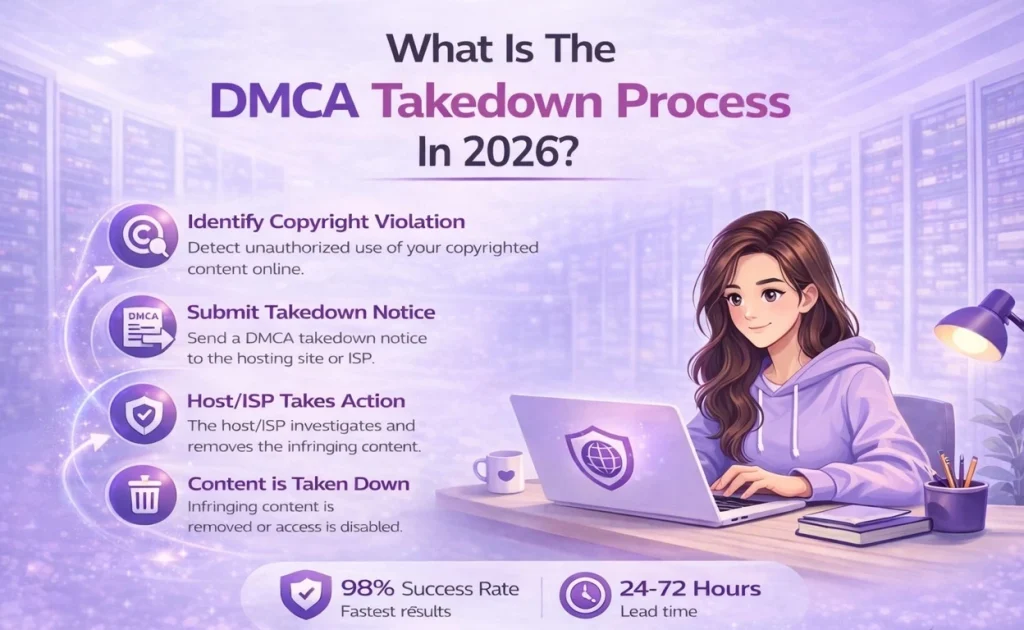
When people hear the phrase DMCA takedown process, the first reaction is usually fear.
Website owners imagine instant shutdowns, legal threats, or losing everything they’ve built overnight.
But let me be very clear with you from the start: The DMCA takedown process is not designed to destroy websites.
It is designed to manage copyright complaints in an organized, step-by-step way.
Once you understand how this process actually works, it stops feeling scary and starts feeling manageable. Let’s go through it carefully, using real logic and real world behavior, not myths or panic.
Table of Contents
What the DMCA Takedown Process Really Is
The DMCA takedown process is a formal notice-and-response system created to handle copyright disputes online.
It is important to understand this clearly:
- It is not one sudden action
- It is not instant punishment
- It is not proof that you are guilty
Instead, it is a structured flow:
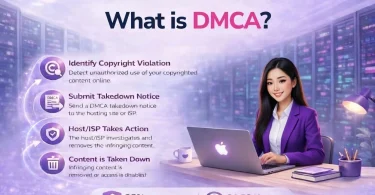
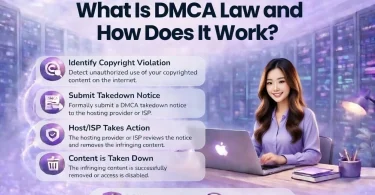
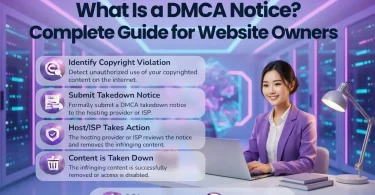
Complaint → Review → Temporary action → Owner response → Resolution
The goal is balance:
- Copyright owners get a way to report misuse
- Website owners get a chance to respond and fix the issue
Why the DMCA Takedown Process Exists
Before this system existed, copyright disputes were messy.
- Copyright owners had to go to court
- Cases were slow and expensive
- Hosting companies didn’t know how to respond
The DMCA takedown process was introduced to:
- Handle complaints faster
- Reduce unnecessary court cases
- Give hosts a safe, legal framework
- Keep the internet from turning chaotic
The idea was good. Problems only start when people don’t understand how the process works.
How the DMCA Takedown Process Works (Step by Step)
Now let’s walk through the full process exactly as it usually happens in real life.
Step 1: A Copyright Complaint Is Filed
Everything starts when someone believes that content on your website uses their copyrighted work without permission.
This content could be:
- An image
- A video
- A blog article
- A downloadable file
- User generated content
The copyright owner prepares a DMCA takedown notice and usually sends it to:
- Your hosting provider
- Sometimes the platform you use
At this stage, remember one critical thing:
This is only an allegation, not a decision.
Step 2: The Hosting Provider Reviews the Notice
Many website owners ask this question: “Does my hosting company check if the claim is actually true?”
The honest answer: Not deeply.
The host usually checks:
- Is the notice properly formatted?
- Does it include required legal details?
- Does it appear valid under DMCA rules?
Hosting companies are not judges.
Their job is to respond correctly, not investigate ownership disputes.
Step 3: Temporary Action on the Reported Content
Once the host considers the notice valid, they take temporary protective action.
This may include:
- Disabling access to a specific URL
- Blocking or removing a single file
- Forwarding the notice to you with instructions
Here’s an important truth many people don’t realize:
DMCA actions are usually content specific, not site wide.
In most cases:
- One page is affected
- One file is restricted
- Not your entire website
Step 4: You Are Notified and Expected to Respond
Now the process reaches you, the website owner.
This is the most important stage.
You are expected to:
- Read the notice carefully
- Identify the reported content
- Decide how you want to respond
This is not the time to panic.
This is the time to act calmly and logically.
Step 5: Your Response Options as a Website Owner
At this stage, you usually have four practical options:
- Remove the content: Best choice if the claim is correct or you want zero risk.
- Edit or replace the content: Remove copyrighted parts and keep original sections.
- Provide proof of ownership or permission: Useful if you own the content or have a valid license.
- Submit a DMCA counter notice: Used when you genuinely believe the claim is false.
In reality, most cases end with option 1 or 2 and go no further.
Step 6: Resolution or Escalation
This is the final phase of the DMCA takedown process.
- If you fix or remove the content → the issue usually ends
- If you ignore the notice → hosting services may be limited
- If you submit a counter notice → the complainant must take legal action to continue
Only a very small percentage of DMCA cases ever reach court.
Most are resolved quietly.
DMCA Takedown Process Timeline (Easy Overview)
To make everything crystal clear, let’s look at the DMCA takedown process as a timeline. This helps you see who acts at each stage, what actually happens, and how your website is affected.
| Stage | Who Takes Action | What Happens | Effect on Your Website |
| Complaint Filed | Copyright owner | A DMCA notice is sent to your hosting provider | No immediate change |
| Initial Review | Hosting provider | The notice is checked for basic legal validity | Website stays live |
| Temporary Action | Hosting provider | Access to the reported content is limited | Only one page or file is affected |
| Owner Response | You (website owner) | You remove, edit, or counter the claim | Issue usually resolves |
| Final Outcome | Host or complainant | Case is closed or legally escalated | Website remains stable |
What this timeline clearly shows is something many people don’t realize:
The DMCA takedown process happens step by step.
It is gradual, controlled, and content specific, not sudden or site wide.
What the DMCA Takedown Process Is NOT
Let’s clear some common fears once and for all, because this is where most misunderstandings come from.
The DMCA takedown process is NOT:
- Instant website deletion: Your entire website does not disappear the moment a complaint is filed.
- Automatic account termination: Hosting accounts are not closed without warning or a chance to respond.
- Proof that you are guilty: A DMCA notice is only an allegation, not a final decision.
- A criminal case: DMCA takedowns are part of civil copyright handling, not criminal law.
In reality, the DMCA takedown process is simply a structured civil system designed to manage copyright complaints in an orderly way, nothing more, nothing less.
Why Most Website Owners Get Into Trouble
Most problems related to DMCA don’t happen because the law itself is unfair. They happen because the process is misunderstood or ignored.
Website owners usually get into trouble because:
- DMCA notices are ignored or seen too late
- Emails are not read carefully, so important instructions are missed
- Panic takes over, leading to rushed or wrong decisions
- Content ownership is not documented, making it hard to respond confidently
When you clearly understand how the DMCA takedown process works, almost all of these issues can be avoided. Knowledge turns confusion into control.
Why Knowing the DMCA Takedown Process Protects You
When you clearly understand how the DMCA takedown process works, you stop reacting emotionally and start responding confidently.
This knowledge helps you:
- Stay calm when a notice arrives, instead of panicking
- Know exactly which stage you are in, so you don’t guess or assume
- Respond correctly and on time, reducing risk and downtime
- Maintain a healthy relationship with your hosting provider
- Protect your website’s reputation and long term stability
In the end, understanding the process puts you in control.
Knowledge is what turns a stressful situation into a manageable one.
Conclusion
The DMCA takedown process is not designed to scare you or shut down your website overnight. It is a clear, step by step system focused on notice, response, and resolution.
When you understand how each stage works, you stop reacting emotionally and start acting responsibly. Most DMCA issues are resolved quietly when handled properly.
Knowing this process keeps your website stable, your hosting secure, and your project firmly under your control.